Ground source heat pump cost: what it really costs in Kent
What a ground source heat pump costs fitted in Kent, what the grant takes off, and when it's worth it over air source. Real prices from Thomas.
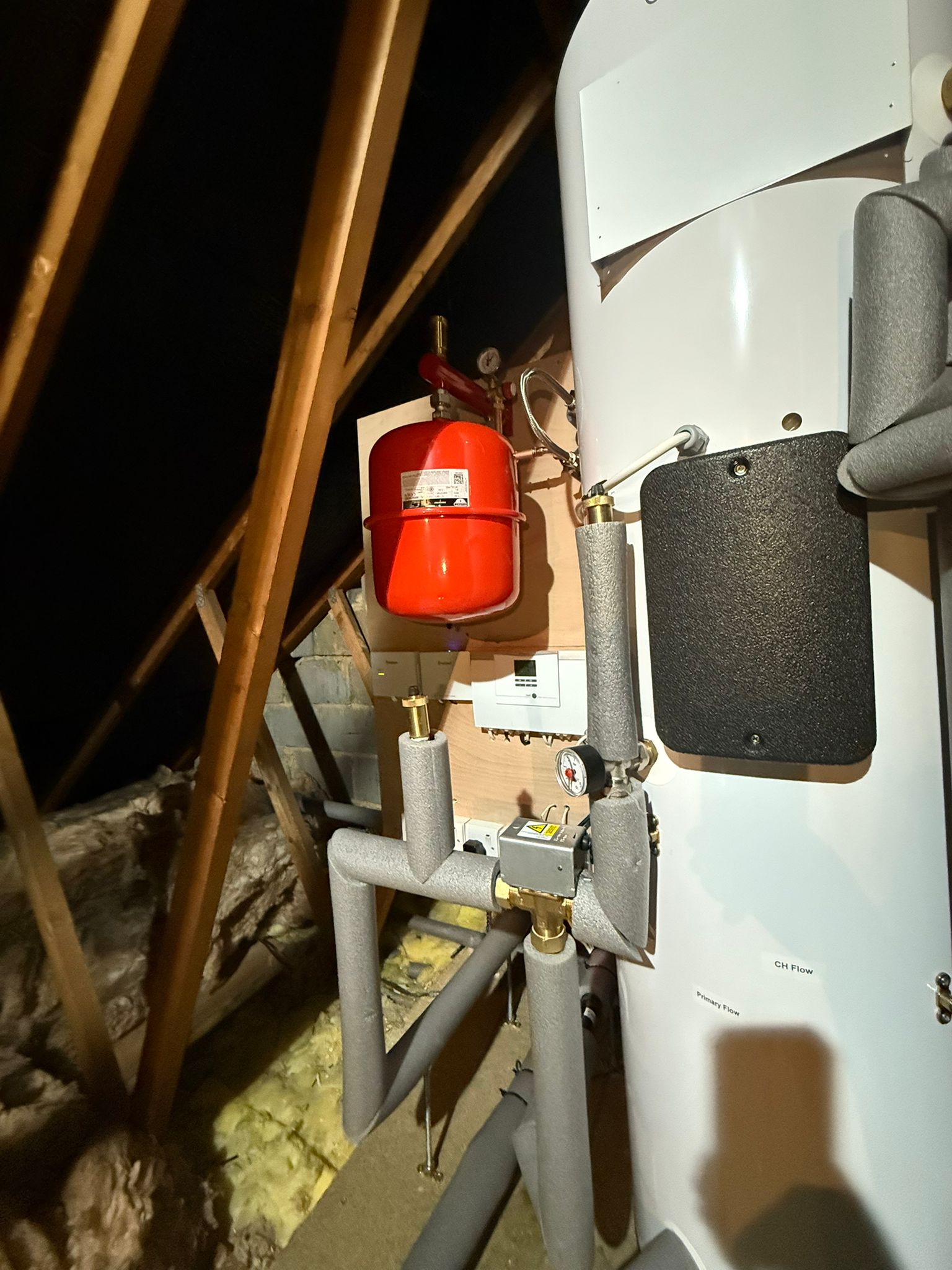
A ground source heat pump usually costs £14,000 to £22,000 fully fitted when I quote one in Kent, before any grant. Take off the Boiler Upgrade Scheme grant of up to £7,500 and you’re looking at roughly £6,500 to £14,500.
That’s the honest ground source heat pump cost. For comparison, an air source heat pump from me is usually £8,500 to £11,000 fitted before the grant. If you’ve got a few in front of you, here’s how to compare heat pump quotes. Same grant, much smaller bill. So the real question isn’t what ground source costs. It’s whether the extra is worth it for your house, and for most Kent homes I don’t think it is.
Where the money goes
People assume the ground source unit itself must be the expensive part. It isn’t really. The heat pump that sits in your utility room or garage is a box of pipes, a compressor and some controls, much like the air source version.
The difference is the ground work. To get heat out of the ground you have to put a lot of pipe into it. That means either long trenches dug across a garden, or boreholes drilled straight down where there isn’t the room. Either way you need diggers or a drilling rig, someone to deal with the spoil, and a garden that needs putting back together afterwards.
That’s why my range for ground source is so wide. A house with a big, open field next to it is one job. A house with a small garden, where we’d need to drill, is a very different one. The top end of that £14,000 to £22,000 is nearly always about what’s under the lawn, not what’s in the house.
Think of it like buying a car versus building the road to drive it on. The car costs much the same either way. The road depends entirely on the land.
There’s a bit more on the full breakdown of what goes into any heat pump price in my post on how much a heat pump costs to install in the UK.
Ground source vs air source heat pump
Both do the same job. They take heat from outside, concentrate it, and push it into your radiators and hot water. An air source heat pump takes it from the air. A ground source heat pump takes it from the soil.
The case for ground source is that the ground holds a steadier temperature than the air does. On a freezing January morning the air outside is at its coldest just when you want the most heat. A few feet down, the ground hasn’t noticed. So a ground source system has an easier time in the depths of winter, and that tends to show in the running costs.
The case for air source is everything else. It’s a unit on a wall or on a slab in the garden. No trenches, no drilling, a much shorter job, and a much smaller bill at the start. Air source heat pumps have come on a long way, and the ones I fit heat Kent homes perfectly well through the winter when they’re sized and set up properly.
Here’s where I’ll say something that won’t make me popular with everyone. I’ve seen ground source sold as the “premium” option, as if it’s simply the better heat pump and anyone who can afford it should have it. That’s not how I see it. If the house is right, a good air source install will do the job for a lot less money, and the gap in running costs has to be big to pay back that extra up front.
If you want to know how either type compares with what you’re paying now, I went through the running costs in heat pump vs gas boiler running costs. The short version is that the settings matter more than most people think.
When ground source earns its extra cost
I’m not against ground source. There are homes where it’s the right call, and I’ll happily fit one. These are the ones where I’d take it seriously.
You’ve got land. A big garden, a paddock or a field next to the house makes the ground work much simpler, and that’s what keeps the price towards the lower end of my range.
The house needs a lot of heat. A large, older farmhouse that’s hard to insulate fully is where the steadier ground temperature counts for most, because the system is working hard for more of the year.
You’re on oil or LPG. Plenty of rural Kent villages are off the gas grid. Until 31 March 2027, off-gas homes replacing oil or LPG heating can get up to £9,000 off an air source or ground source heat pump through the Boiler Upgrade Scheme, rather than the standard rate of up to £7,500, as Tunbridge Wells Borough Council sets out. I wrote up who qualifies in the heat pump grant for oil boilers.
You’re already digging. If the garden is being landscaped or there’s building work going on anyway, some of the mess is already happening.
If none of those sound like you, I’d nearly always point you to air source. A semi with a normal garden in Maidstone or Tonbridge is a good example. It’s a lot of extra money for a system that won’t pay you back any time soon.
The ground source heat pump grant
The grant is the same Boiler Upgrade Scheme money whichever type you pick. It’s up to £7,500 towards an air source or ground source heat pump, or up to £9,000 if you’re coming off oil or LPG in an off-gas home until 31 March 2027. The installer applies for it, and it has to be an MCS-certified installer, so you don’t fill in forms yourself.
To get it, you have to own the home and be replacing oil, gas, electric or LPG heating. It’s one grant per property, and you can’t use it to swap one low carbon system for another. Social housing and most new builds can’t claim. You can check the details on the government’s Boiler Upgrade Scheme page.
What I’d say is this. The grant is a flat amount, not a percentage. On an air source job it can take off most of the bill. On a ground source job it takes off a lot less of the total. That’s another reason the sums so often come out in favour of air source.
Why the survey decides the price
The one thing I’d never do is give you a ground source price over the phone.
I did a heat-loss survey on a 1930s semi in Sevenoaks with nine radiators. Another installer had already quoted to replace all nine, before anyone had measured the house. That’s guessing, and it’s guessing with your money.
With ground source the guesswork costs even more. How much heat the house loses decides how big the heat pump needs to be. The size of the heat pump decides how much pipe has to go in the ground. And the pipe in the ground is the expensive bit. Get the first number wrong and every number after it is wrong too.
So a proper ground source quote should start with a room-by-room heat-loss survey, then tell you the size of the heat pump, whether it’s trenches or boreholes, which radiators (if any) need changing, and what the grant comes off. If a quote doesn’t show you that, ask why.
You can read more about how I go about it on my heat pumps page.
Questions people ask
How good are ground source heat pumps?
They’re very good at what they do. Because the ground stays at a steadier temperature than the air, they have an easier time in the coldest weeks. The catch isn’t how well they work. It’s what they cost to put in, and whether your house and garden suit one.
How deep do you need to dig for a ground source heat pump?
How deep you need to dig depends on whether it’s trenches or boreholes: trenches are shallow but long, boreholes go much deeper but take far less space. Trenches need plenty of garden. Boreholes need a drilling rig. Which one suits you, and how much pipe is needed, comes out of the heat-loss survey and a look at the ground. I wouldn’t trust anyone who gives you a figure before doing that.
What is an air-to-air heating system?
It’s a heat pump that warms the air in a room directly, a bit like air conditioning running in reverse. It doesn’t do radiators or hot water. It has its own smaller grant, and I explained who it suits in the air to air heat pump grant.
What I’d do next
If you’re weighing up ground source vs air source, don’t start with the brochure. Start with the house: how much heat it loses, how much outside space you’ve got, and what you’re heating with now. That’ll tell you within one visit which way to go.
If you’re in Kent and want me to look at it properly, give me a ring on 01622 234 233, or ask for a free quote and I’ll come out and measure up.